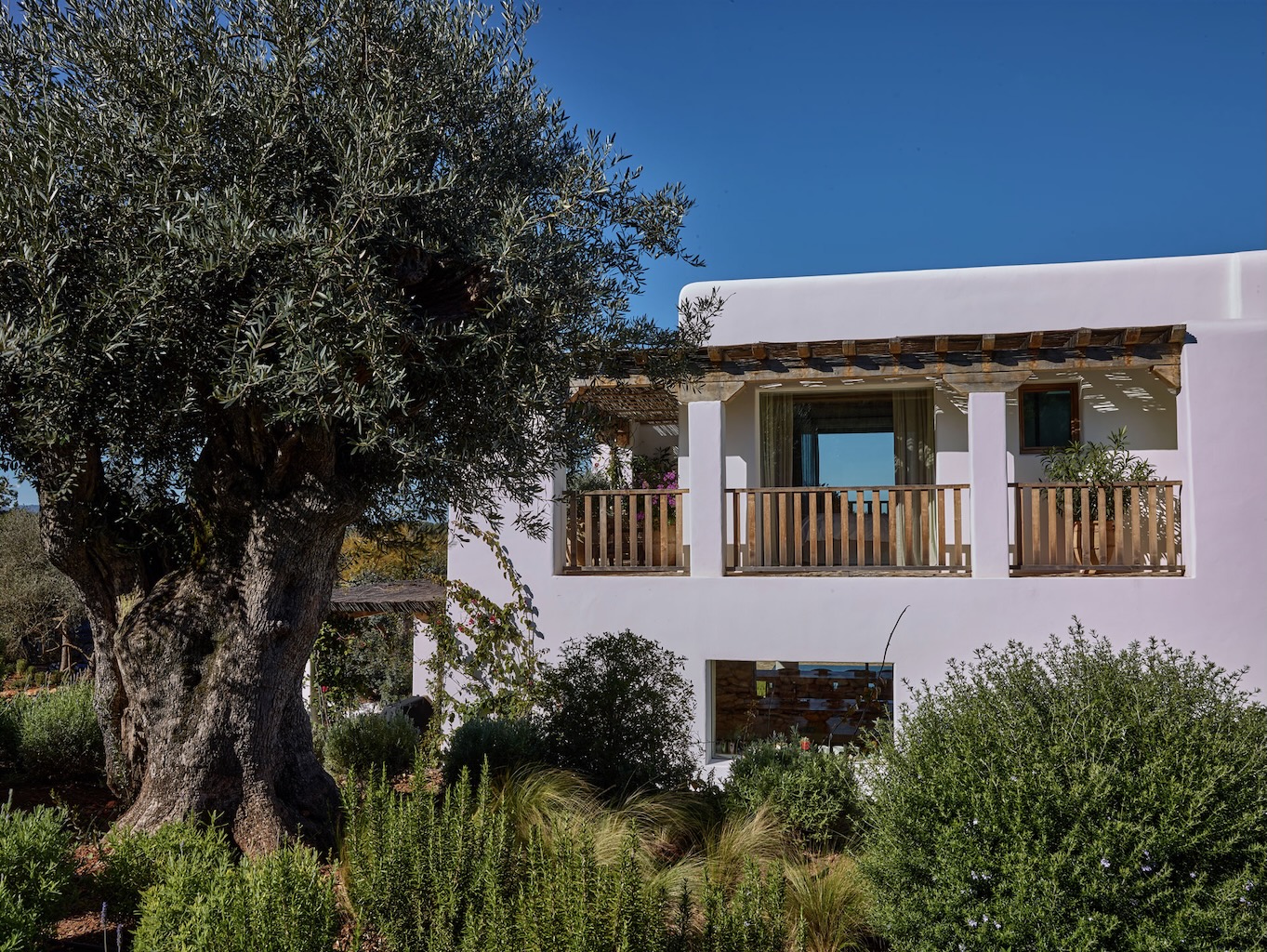
Before Blakstad took on the restoration of this farmhouse, it had sat empty for years. Set amongst mature olive groves, the 100-year-old casa payesa was a beautiful, if run-down, example of the island’s vernacular building tradition. A few additions from the 80s and 90s aside, the villa’s original cubic volumes were still viable and the thick whitewashed walls, hand-hewn roof beams and stone sourced from the surrounding land added to its historical character. Blakstad’s brief was to bring the house back to life without losing its soul or historical value.
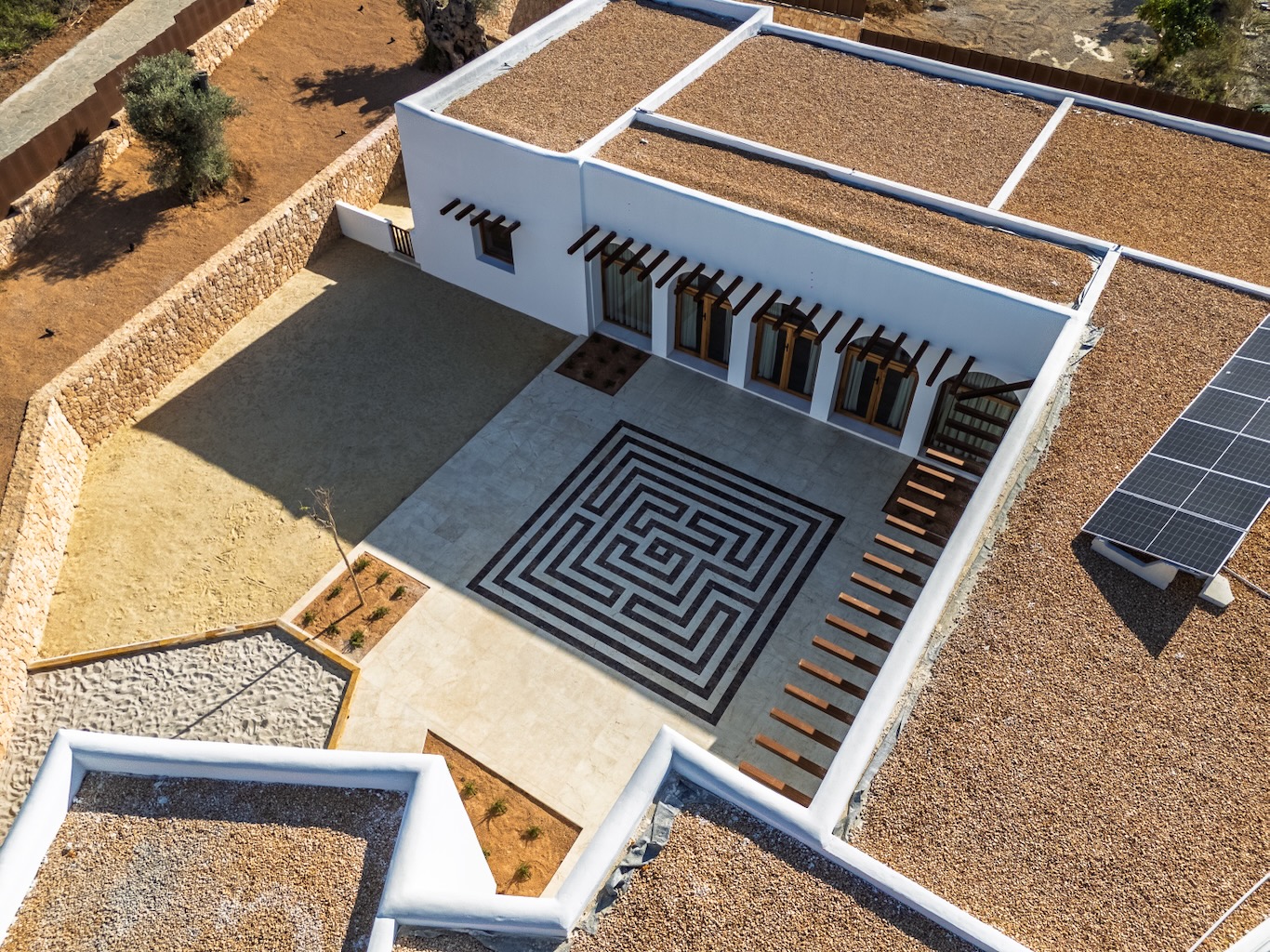
As with many restorations in Ibiza, the permits granted required Blakstad to keep to the existing footprint and layout – ostensibly a cluster of low white volumes stepped across the plot and linked by porches, pathways and a circular stone courtyard at the entrance. The idea was not to strip away each space and start anew, but to create a conversation between them. As many of the original features were retained as possible. Stunning Sabina wood lintels still span the window openings as they had done for a hundred years, and the dry-stone retaining walls that terrace the garden were rebuilt by hand in the same method used on the island for centuries. Where it wasn’t possible to restore an original element, the team worked to honour the essence of the architecture around it.
Upstairs, wood balustrades run the length of the first-floor porches, and in the garden, pergolas are shaded by sheets of canyet roofing. Limewash finishes were used on walls and reclaimed wood beams, sourced from a stockpile the studio has been collecting over several years, were left exposed. While tradition anchors the project, the same attention was given to creating an ideal environment for contemporary island living. On the ground floor, full-height pocket doors open the living spaces to the garden, sliding away completely into the wall cavity. The ceiling from the covered outdoor dining porch leads straight through into the kitchen and dining room, joining these spaces under one roofline.
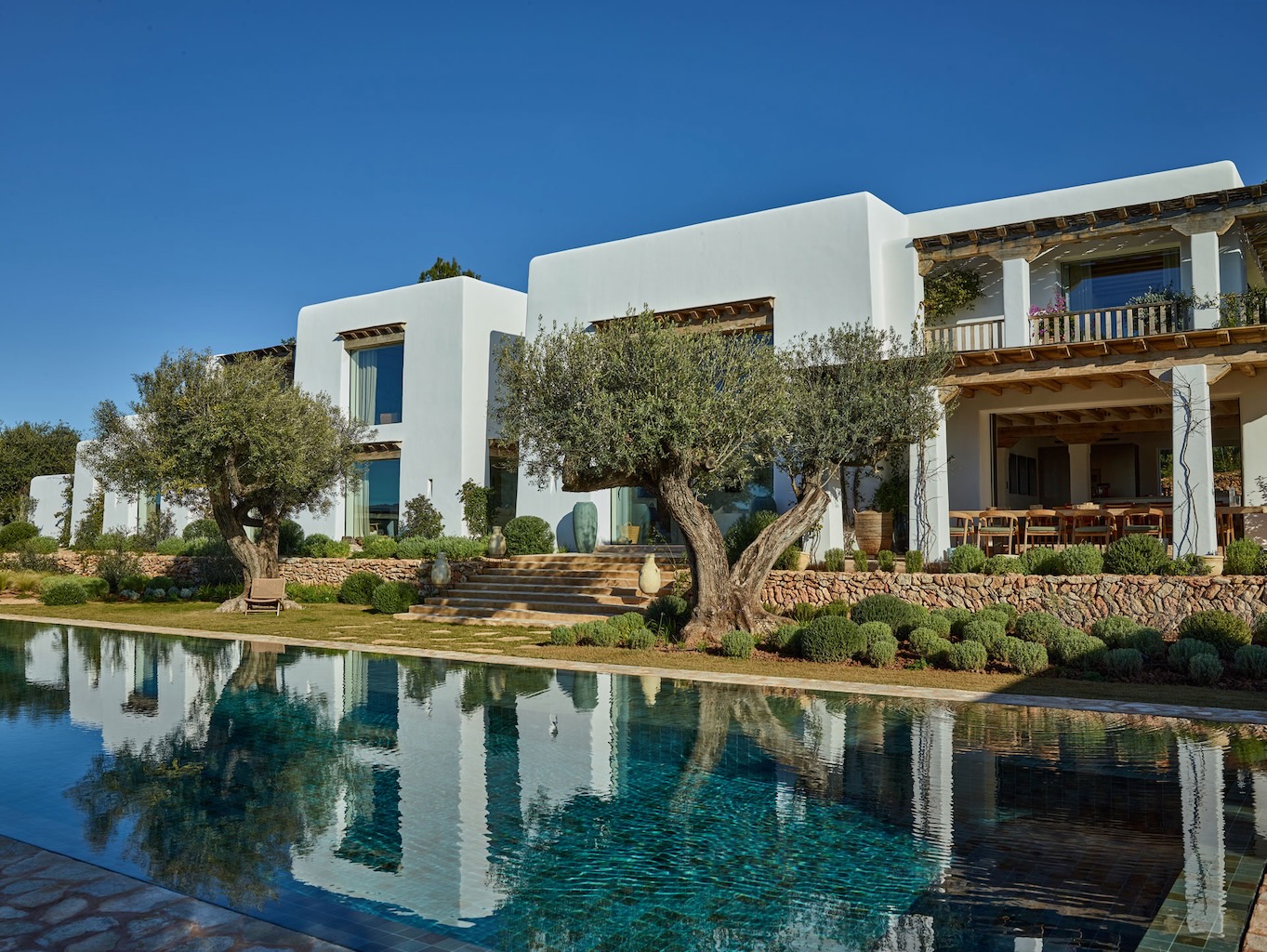
The sleek, well-proportioned kitchen at the far end of that area, boasts bespoke cabinetry crafted in Ibiza and finished with hand-forged iron fittings, as is the tradition. In the primary bathroom, a freestanding stone bath sits beneath the same deep-set window design used throughout the rest of the house. A separate guest house stands to one side of the pool, its own porch stepping down towards the water.
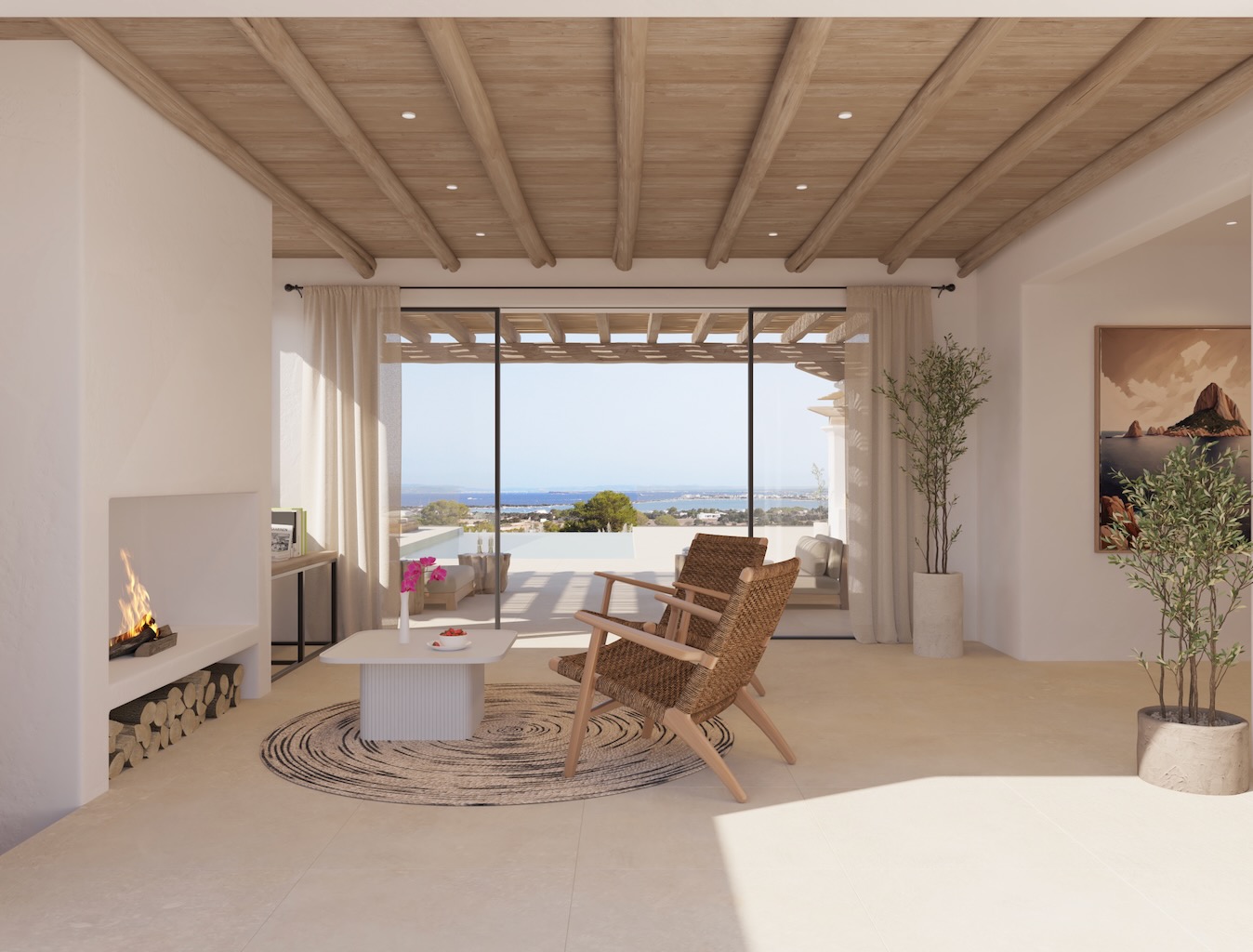
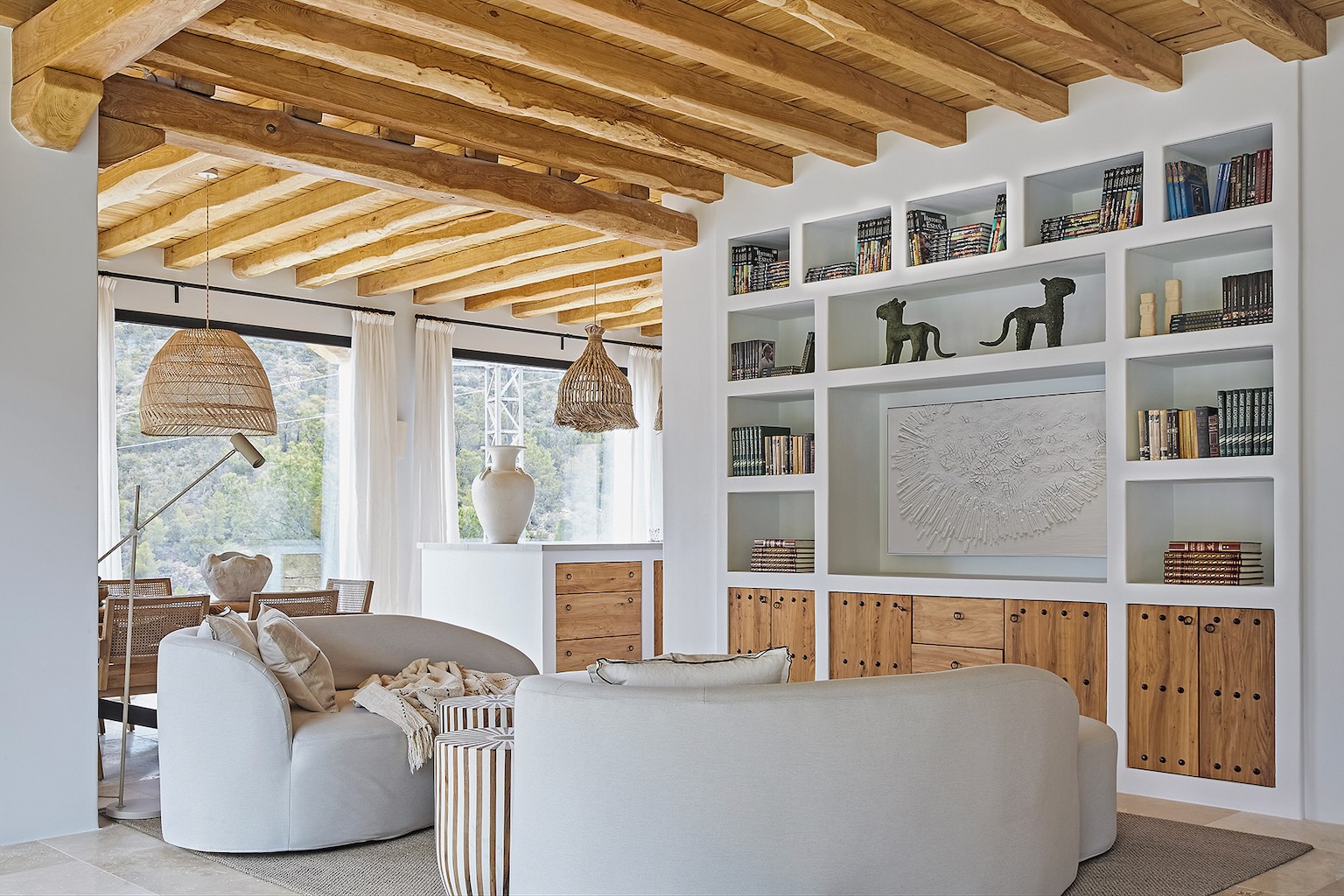
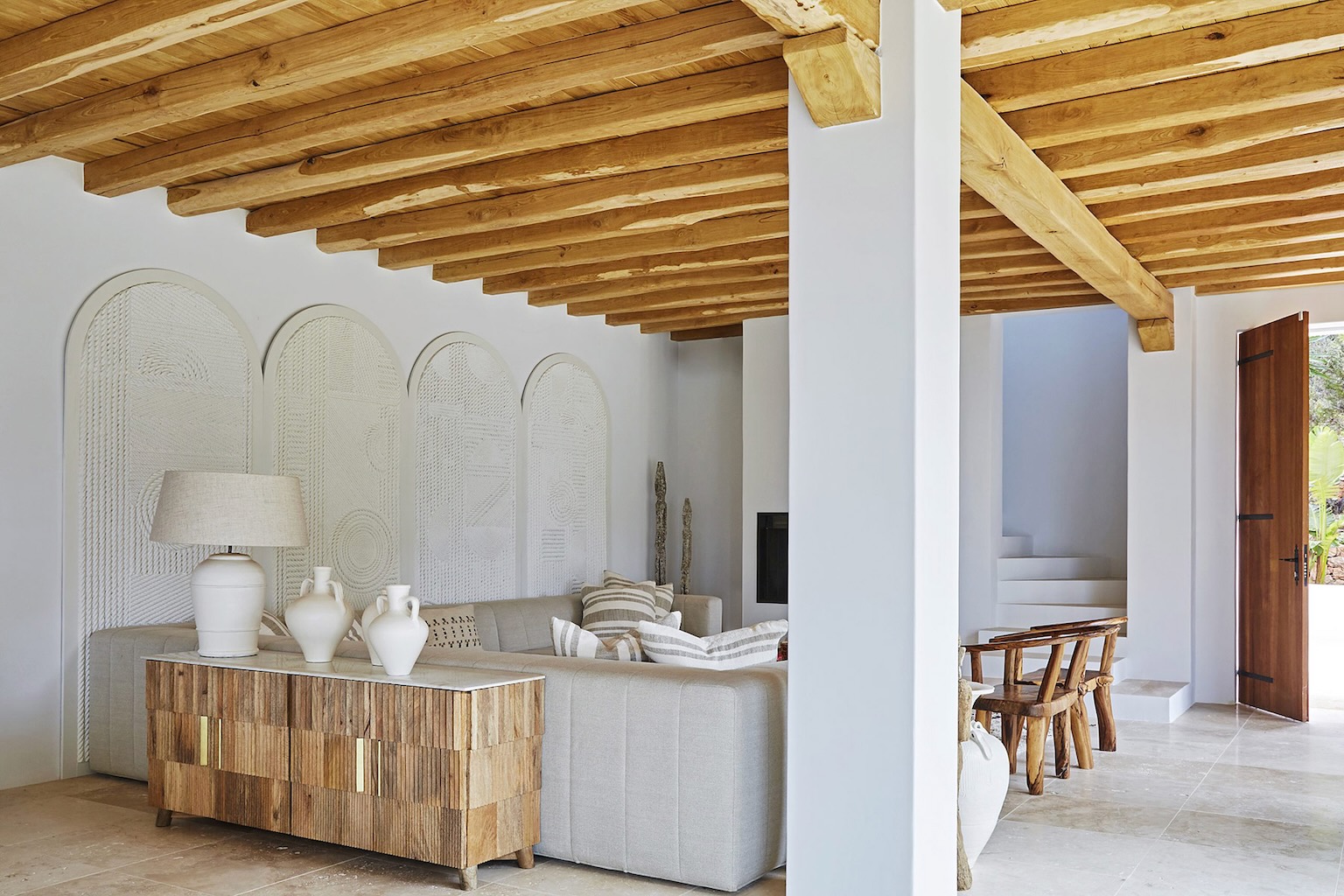
The interiors were designed by Madrid-based Raúl Martins, working in wood, brass and clay to keep the furnishings close to the materials of the house itself. In the main living room, floor-to-ceiling built-in joinery holds books and objets in a grid of backlit niches. A sideboard combining textured elm, brass finishes and marble sits in the main living space, alongside a series of pale ceramics and the decorative arches of a wall panel made from resin-coated rope. In the dining room, Chandigarh-style chairs pair with a locally crafted table, both designed by Martins, while traditional vases and ceramic pieces were sourced through Findings Gallery.
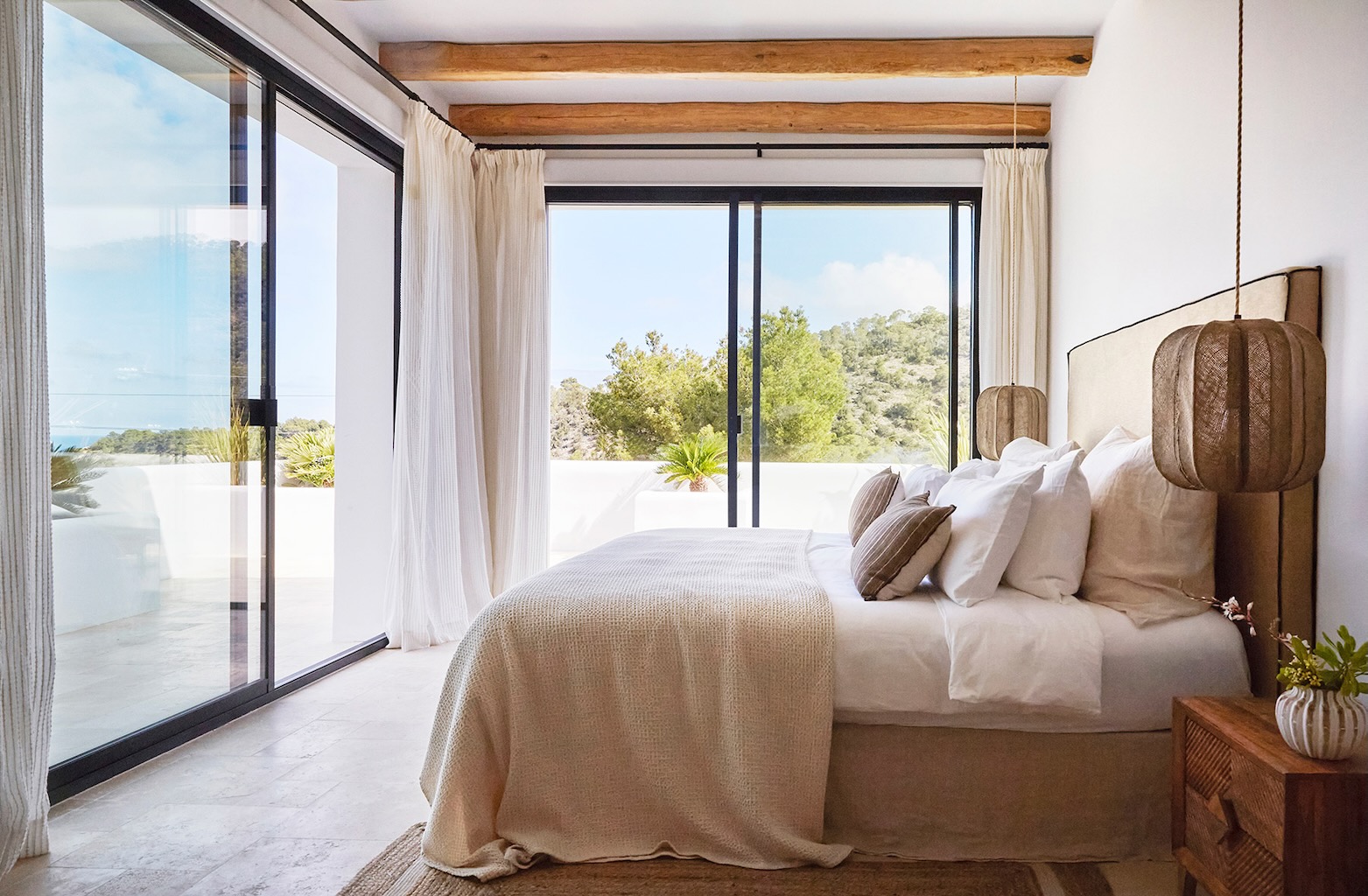
Natural fibre pendant lights hang throughout the house echoing Ibiza’s seafaring culture and referencing the view beyond. In the bedrooms, the same rattan pendants reappear either side of a leather-wrapped headboard, while linen bedding in undyed, shades of sand, taupe and oatmeal keep the palette consistent.
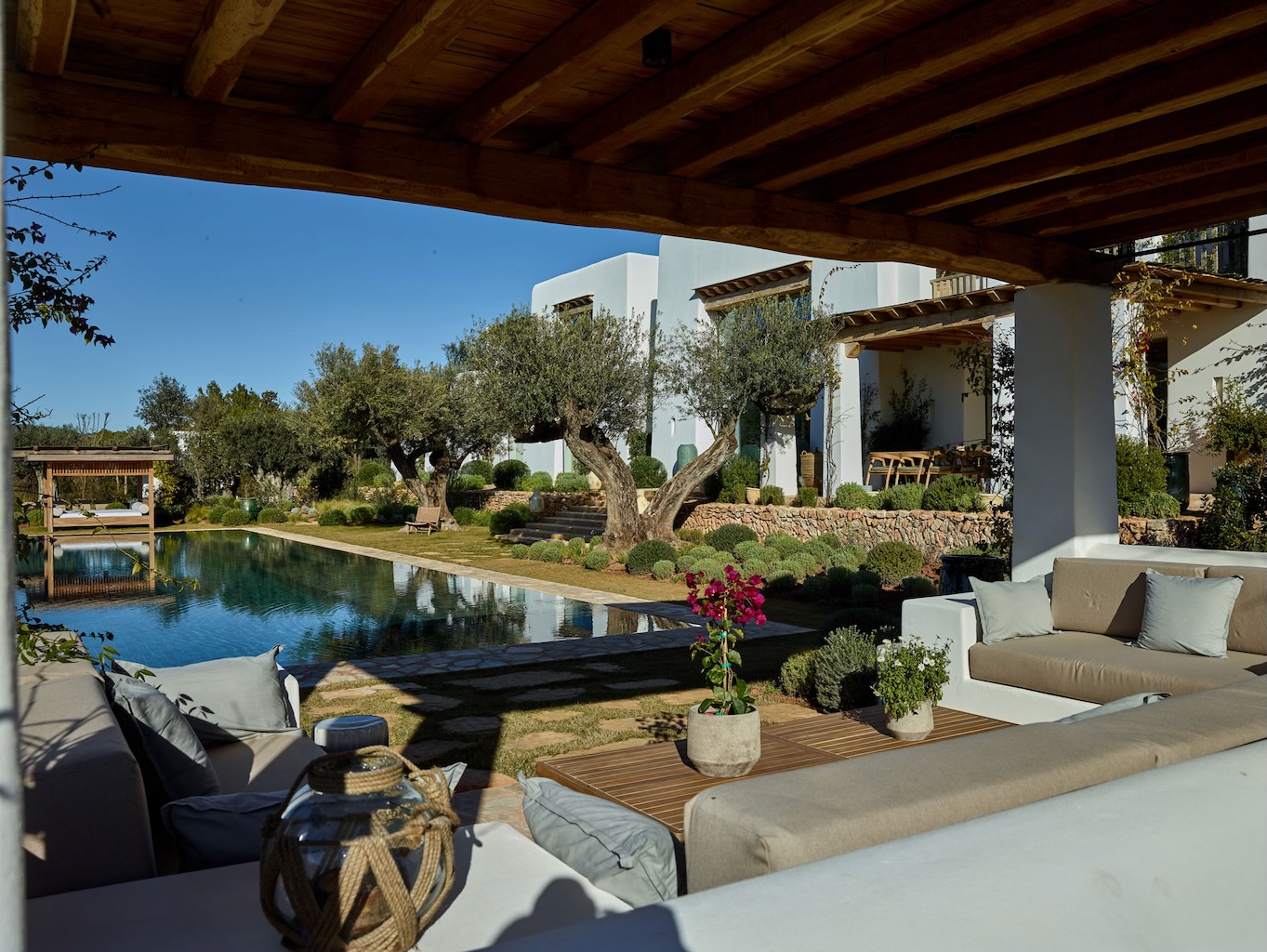
Outdoors, the landscaping was designed and installed by Terravita, who worked with the site’s existing topography rather than imposing something foreign on the land’s natural accents. Rosemary and lavender were planted in spherical shapes, terracotta urns set at intervals along the stone paths added elegance to the bucolic mood, and the property’s ancient gnarled olive trees, some of them centuries old, were left exactly where they stood. By the pool, large loungers and side tables from Gommaire complete the chill-out area.
Decades spent studying the island’s vernacular architecture have given the studio a unique fluency in its own design language. It’s this depth of knowledge, paired with a deep sensitivity for Ibiza’s history and culture and a clear understanding of island living, that transforms a project like this from a simple renovation into an act of preservation.