Set in the quiet countryside near Jesús in Ibiza, Can Olives is a home with more than 300 years of history built into its structure. When the Blakstad team began the restoration, they quickly realised they would need an archaeologist’s help. “Some of the old stonework dated all the way back to Arab rule in Ibiza,” says studio head Rolf Blakstad. “Parts of the house are very, very old, and we had to make sure they were saved.” With extensive experience in restorations, the team at Blakstad Architects and Design Consultants have successfully preserved the historic fabric of the house, creating a stunning country home.

The building had passed through several incarnations, including a period in the 1980s when it was expanded into a small rural hotel. By the time the current owners acquired it, the house was quite dated and many of its original features had been obscured by well-meaning yet incongruous interventions. The brief was clear – restore the architectural character of the original house while adapting it for contemporary use.
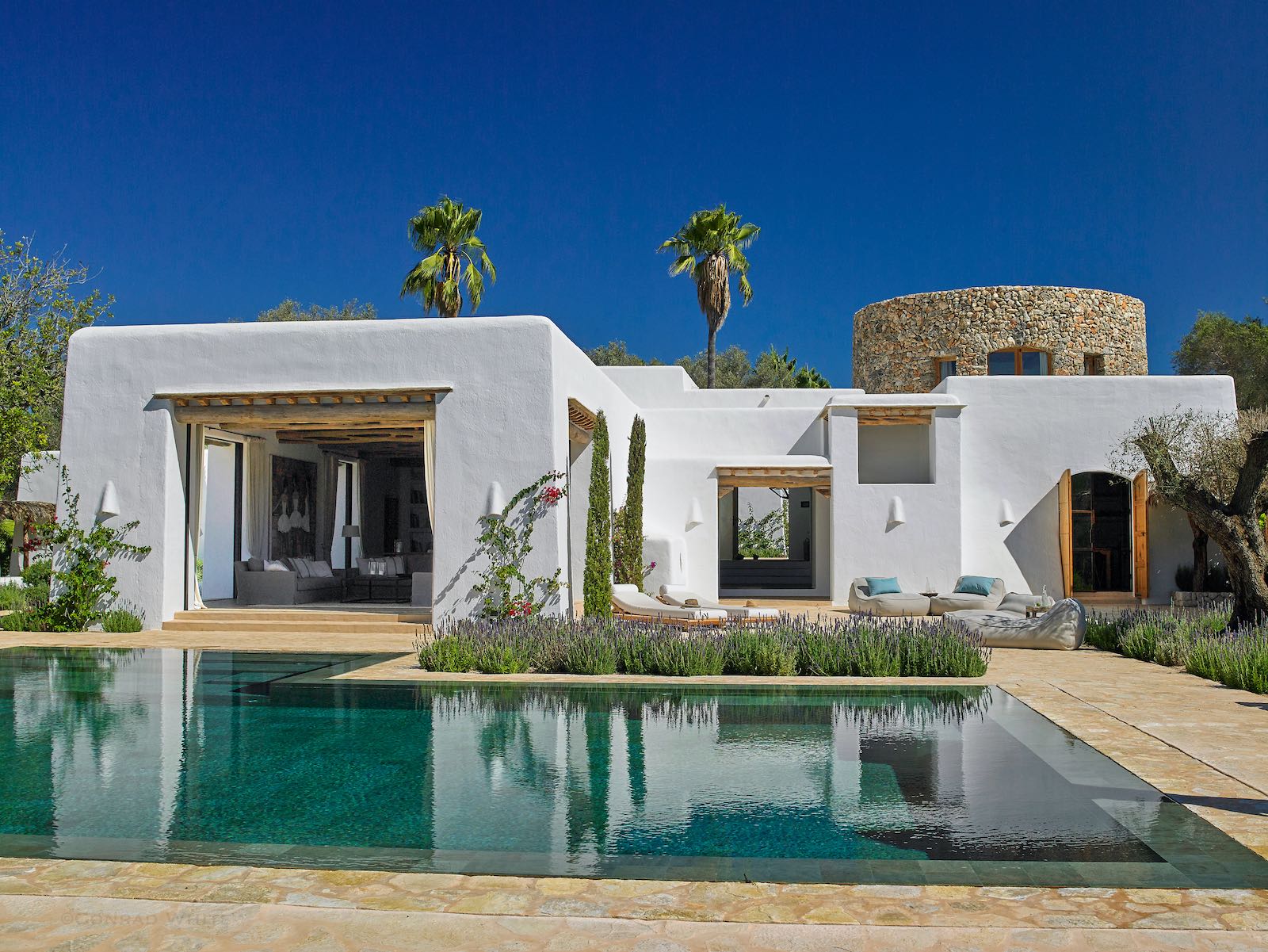
A key constraint was the footprint. Permission to expand was denied, allowing only minimal volume adjustments. These tight parameters required a precise approach and the expertise to create a sense of openness while remaining within the regulations. One of the most visible elements on the property is the round stone tower. Although it appears historic, it’s a modern addition. To make it seem authentic, the team removed the existing cladding and replaced it with stones from the correct era. “Old stone in Ibiza is protected by heritage laws, so every piece was sourced from elsewhere and laid by hand,” says Rolf. The result is a structure that sits easily within the rural landscape, giving the impression it has always formed part of the estate.

Inside the main living areas, the ceilings feature traditional Sabina beams, reclaimed and stored by Blakstad over the years. “Whenever we have the opportunity, we purchase old beams,” says Rolf. “You can never get that many, so we stockpile them. Sometimes we have enough to use in a house like this.” The effect helps reconnect the house with its origins, even as other architectural elements introduce the functions needed for contemporary living.
The living room opens on three sides via large carbon-fibre and glass sliding doors. Their slim profile introduces a minimalist edge that contrasts with the rustic beams above. The kitchen combines wood carpentry with stone worktops, while the dining room and entry hall feature herringbone terracotta tiles sourced from a ruin near Ses Salines. The meeting point between traditional and modern materials is handled smoothly, balancing the overall composition.

The interiors were designed by Clarisse Grumbach-Palme, whose approach for Can Olives aligns with the home’s architectural language. A mix of antique and contemporary furnishings is matched with natural textiles and fibres, complemented by a considered collection of contemporary art. Outdoors, the landscaping was created by La Palmera Garden, framing the property with Mediterranean natives, centenarian olive trees and a lush lawn. Bougainvillea climbs the façades; cypresses mark the driveway and patios are finished in flagstone – the edges of the turquoise tiled pool meeting the stone in perfect agreement.
A historic farmhouse brought back to clarity after decades of alterations, Can Olives captures the principles that guide the Blakstad ethos – detailed, craft-led and consistently determined to honour Ibiza’s architectural lineage and integrity.