A thoughtfully designed home does not begin at the front door. Spaces of arrival are not just routes of access but places of ritual passage, delivering us from the demands of public life into the sanctuary of the physical and metaphysical interior. The experience of coming home starts long before a key slips into a lock or a foot crosses the threshold. We come inside and repeat the same acts every time without much awareness – dropping keys into a dish, slipping off shoes, leaving a bag on a bench. Regardless, of the mundanity of the actions the process of leaving the outside world and going inwards is an opportunity to connect with the self and architecture has a role to play in this process.

Anthropologists describe rites of passage as unfolding in three stages: separation from a previous state, a period of transition in which the self is neither one thing nor the other and then finally, incorporation into the new state. Recognising this in both design and in the daily act of coming and going can have a profound effect on wellbeing. Architecturally, these three stages can be seen in the gate as separation, the path as the liminal middle where the self is neither public or private, and then the threshold at which point the state of privacy is fully achieved. Only at the final entry does incorporation occur, the moment the day is finally set down and the mind can be at ease. Architecture rarely gets credit for supporting this kind of psychological work because good design makes these shifts imperceptible, but a home without a considered arrival asks us to perform an impossible leap, from the fully public to the fully private in a single step – an unnecessary shock to the psyche. The threshold is not simply where we enter a home, but where the outside world begins to fall away.
Across history and cultures, builders have instinctively understood the importance of the entranceway. Roman homes welcomed visitors through the vestibulum before revealing the private interior beyond. In Japan, the genkan marks the point where shoes, and with them the residue of the outside world, are left behind. The riads of North Africa and Andalusia conceal the home’s delicate beauty behind modest openings that reveal lush and tranquil courtyards. Here in Ibiza, the portal de feixa signalled the passage from the island’s rural landscape into cultivated land, while traditional fincas used gates, courtyards and thick whitewashed walls to make the distinction.

This sequence has always been intrinsic to Mediterranean architecture, where homes were designed as places of refuge as much as places of beauty. Traditional Ibicencan fincas emerged from the landscape, creating a gradual passage between the openness of the countryside and the intimacy of domestic life. Contemporary architecture may embrace larger expanses of glass, steel and a stronger connection to the outdoors, but the principle remains unchanged. Privacy and belonging are still created through this movement between worlds.
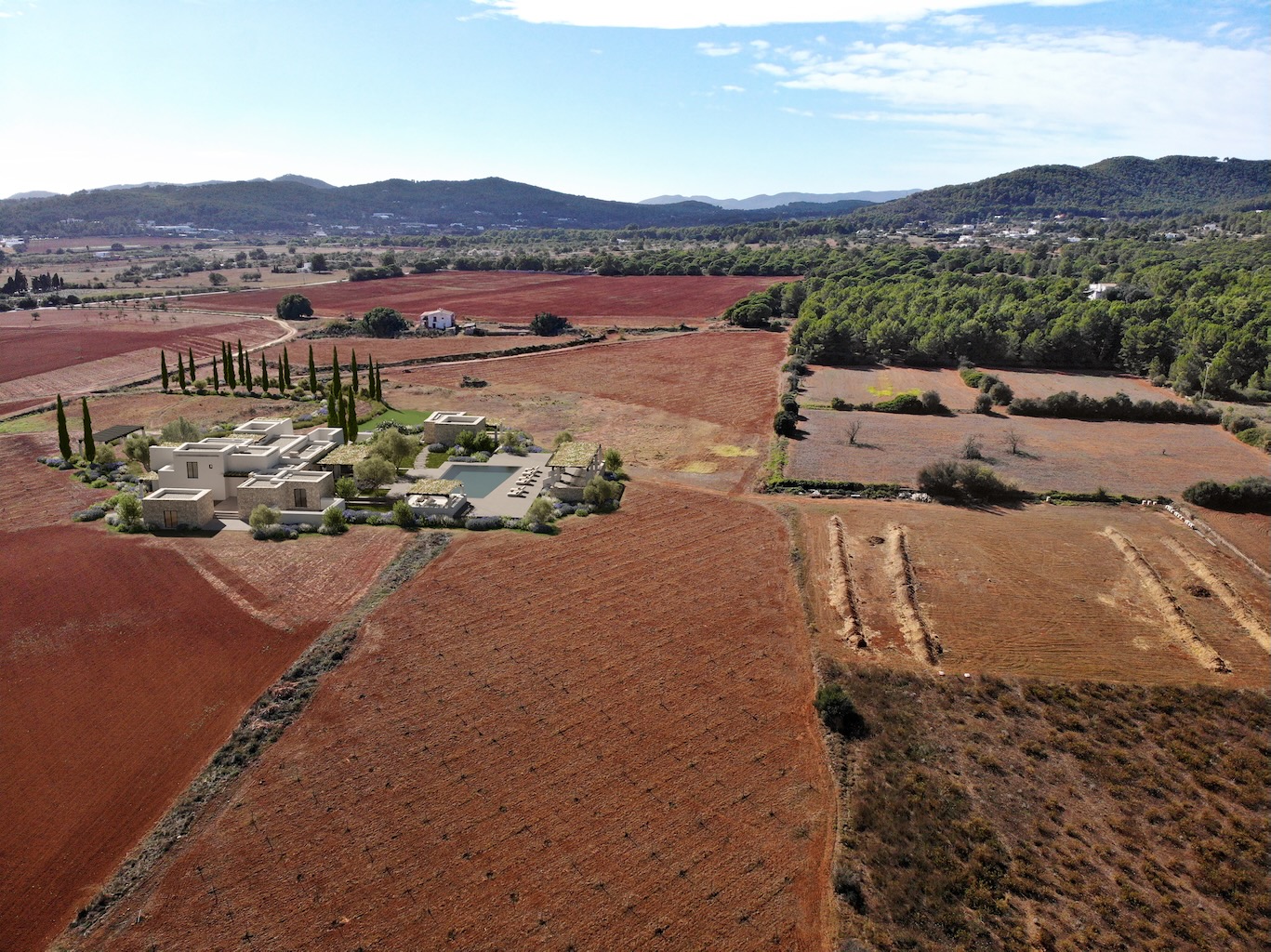
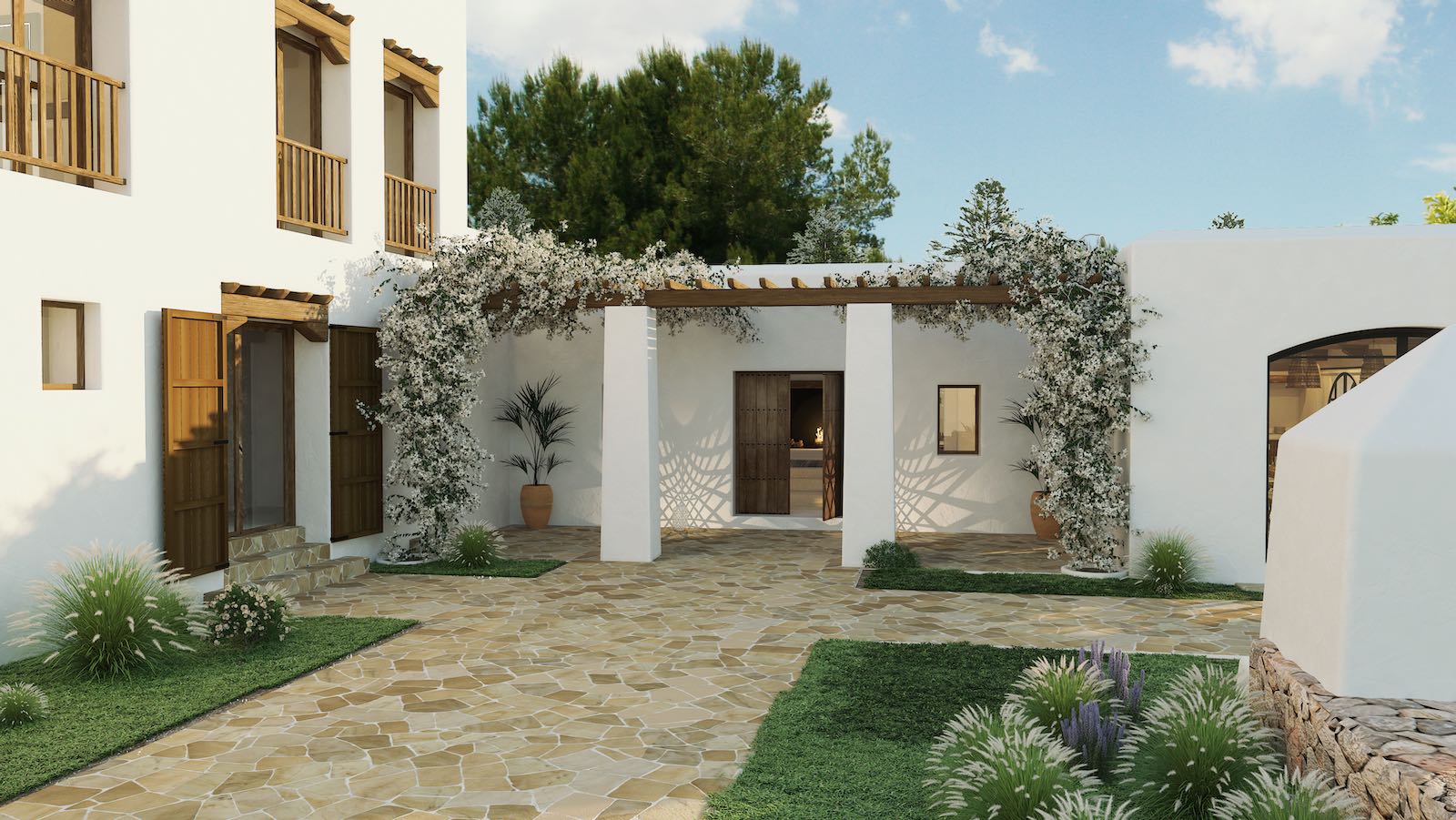
At Blakstad, arrival is conceived in multiple ways. A dry-stone wall follows the contours of a driveway leading to a hand-hewn wooden gate; a pathway lined with olive trees, lavender and rosemary leads to an enclosed courtyard; a water feature offers both a boundary and a cleansing, its music accompanying the return home. Each pause encourages us to take notice, becoming a momentary meditation where one can regain a sense of awe and gratitude for the world around them – the one they are leaving behind and the one they are arriving at.

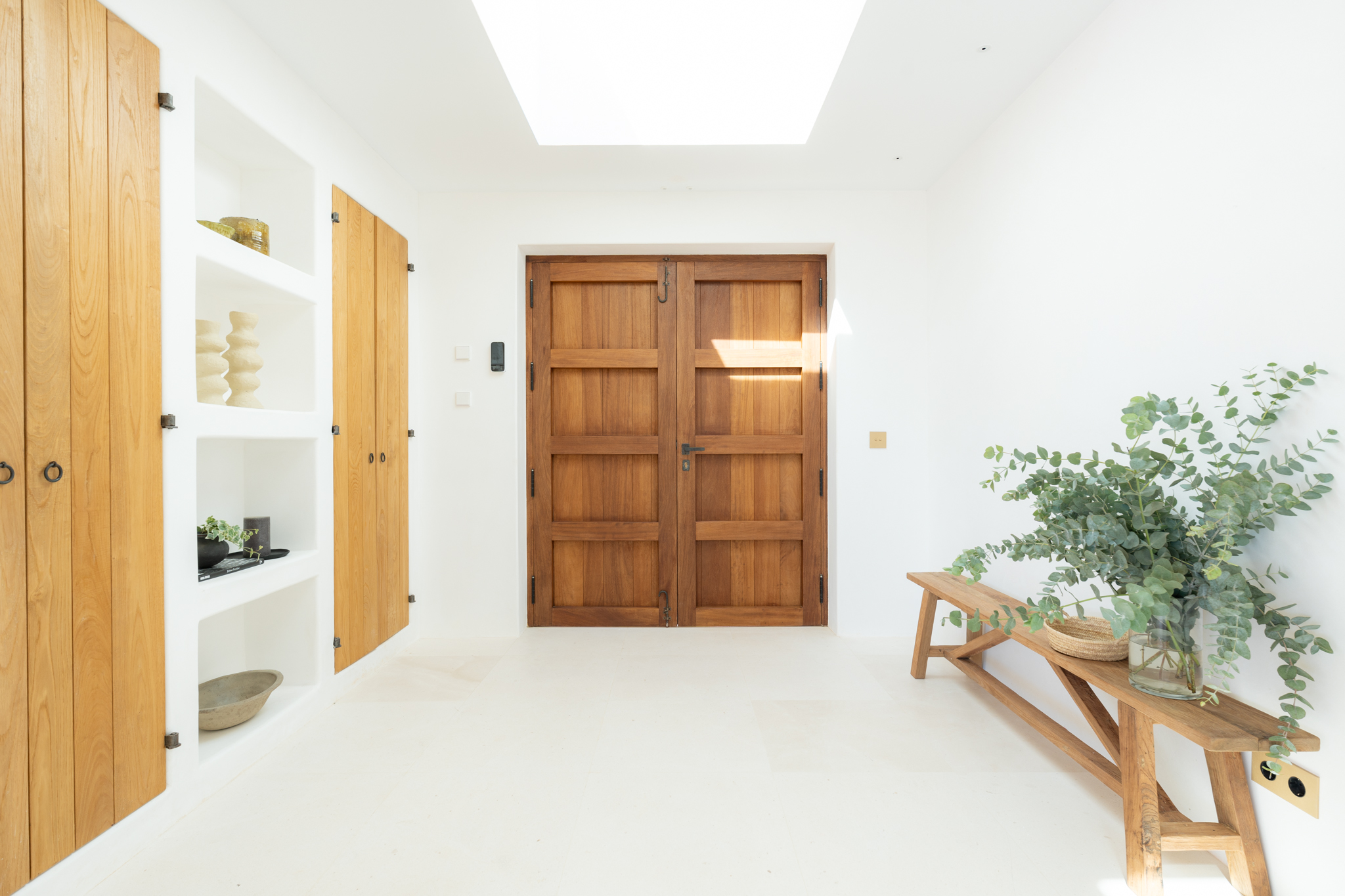
These spaces perform practical roles too. Gates establish security without creating defensiveness. Courtyards temper the climate, directing cooling breezes and filtered light into the heart of the home. Covered walkways provide shelter from the summer sun, while thick walls soften the transition between the warmth outside and the cool calm of the interior. Storage, seating, planting and water all become part of the architecture of arrival, quietly supporting the everyday rituals that accompany coming home.
For many, architecture is about the grand spaces where life is played out: living rooms, kitchens and patios. Yet some of the most meaningful design work happens before we ever step inside. The French philosopher Gaston Bachelard wrote of the house not as a structure to be measured but as a space to be inhabited by memory, describing it as the corner of the world in which we have our first dreams. A home is never purely functional. It is a repository of felt experience, and the entrance is where that experience begins. The particular sound of gravel underfoot, the exact fall of afternoon shade across a courtyard wall, the smell of rosemary crushed by a passing hand: these become, over years, inseparable from the idea of home itself. Arrival, understood this way, is not a preamble to home. It is one of the ways a home is made, every day.