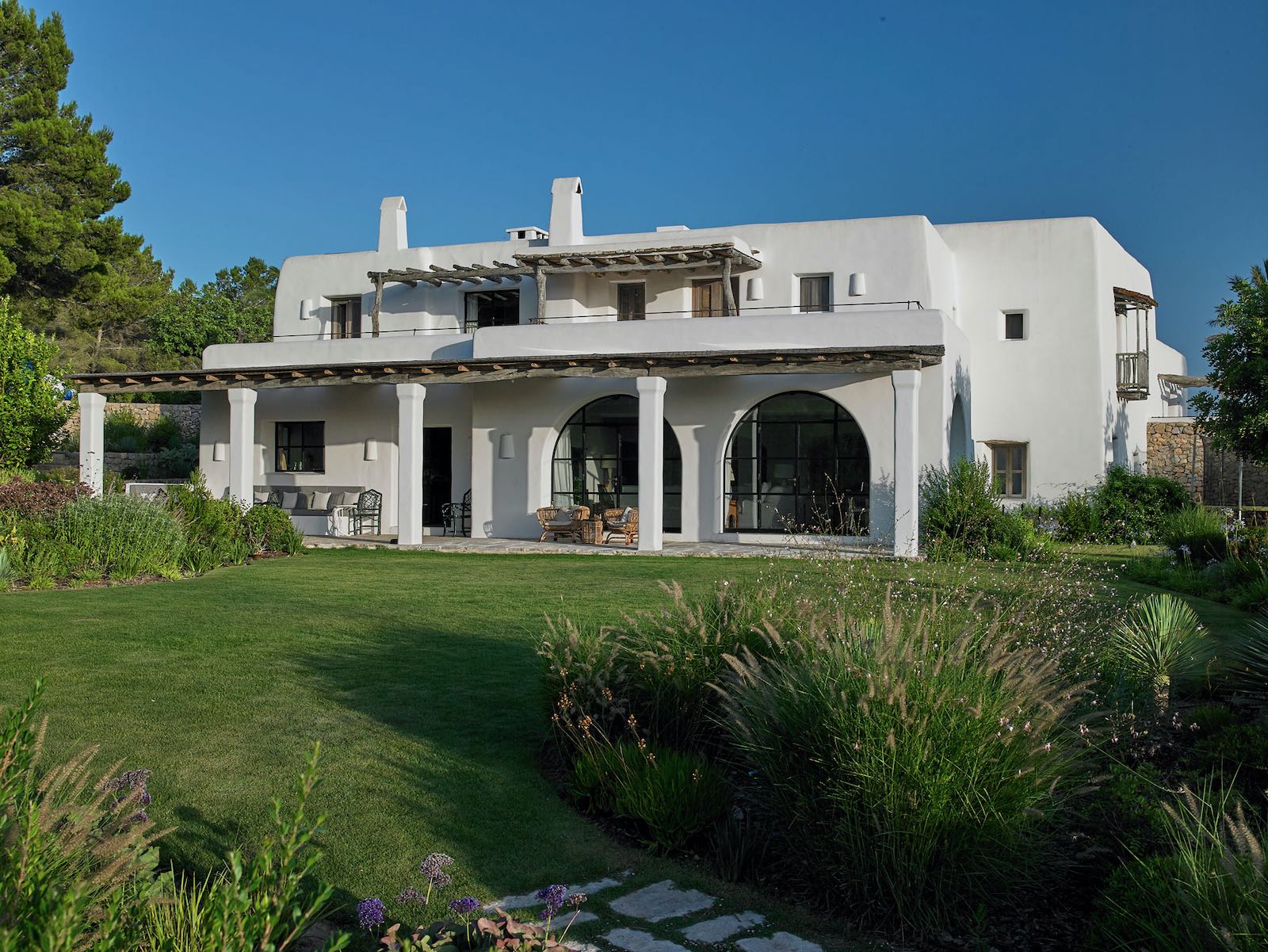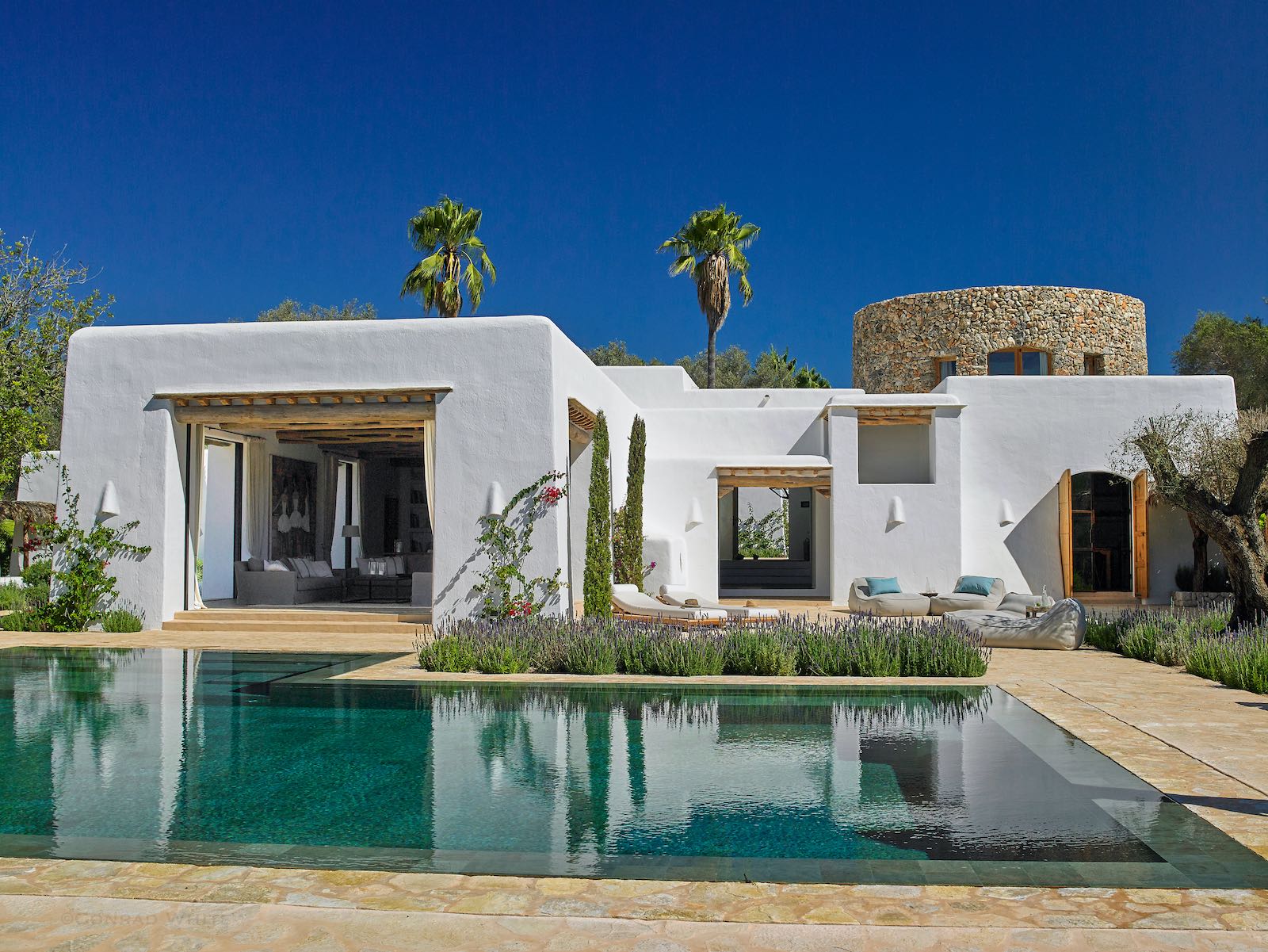
Born in 1939, Ricardo Bofill Leví grew up in a family where design was both profession and inheritance. His architect and builder father instilled an early understanding of architecture as a craft informed by imagination. Following in his father’s footsteps, Bofill enrolled at the Barcelona School of Architecture, his father’s alma mater, popularly considered the best architecture school in the city. During his early student days, he became politically active and a staunch anti-Francoist, his stance leading to arrest followed by an unceremonious expulsion from the university. By the time he completed his studies as a self-imposed exile in Geneva, he had already designed his first project – the family’s holiday home in Cala Nova, Ibiza.

The island was a constant presence in his life. The pathos of the vernacular architecture – its geometries and elegant simplicity – influenced his work for decades as a kind of spatial memory and a reminder of the power of place as a shaper of style. When Bofill founded his studio, Taller de Arquitectura, in 1963, he conceived it less as an office and more as a laboratory of ideas. Architects, sociologists, poets and philosophers worked together in what was then an unconventional experiment. Their aim was to challenge the anonymity of post-war modernism and to restore emotional and cultural meaning to architecture. This spirit of collaboration, curiosity and rebellion would become a hallmark of his career.
The early projects that made Bofill’s name were bold, utopian and defiantly Mediterranean. Works such as Walden 7 near Barcelona and La Muralla Roja in Calpe reimagined communal living as an exploration of form and colour. La Muralla Roja, completed in 1973, remains one of the most iconic residential buildings of the 20th century – a geometric labyrinth of staircases, courtyards and towers painted in gradations of crimson and pink, inspired by the kasbahs of North Africa and the light of the Mediterranean coast. Its interplay of shadow, form and repetition carried a trace of the same logic found in Ibiza’s whitewashed cubes, an architecture shaped by sun, wind and terrain.

The connection between Bofill’s work and the architecture of Ibiza runs deeper than aesthetic resemblance. Both share a sensitivity to proportion, light and human scale. The traditional Ibicencan farmhouse evolved through necessity – thick walls to cool interiors, flat roofs to collect water, small windows to filter light. Bofill’s early explorations mirrored these principles. He saw beauty in function, poetry in restraint and understood that true modernity could – and should – grow from local tradition.
Through the 1970s and 1980s, his style expanded into new territories. In France, he created entire urban districts such as Antigone in Montpellier and Les Espaces d’Abraxas near Paris. Monumental in scale yet classical in composition, their sweeping colonnades and arches reinterpreted the grandeur of ancient Rome through the lens of industrialisation. While these works seemed far removed from the humble farmhouses of Ibiza, they shared the same elements of geometry, order, people and place.

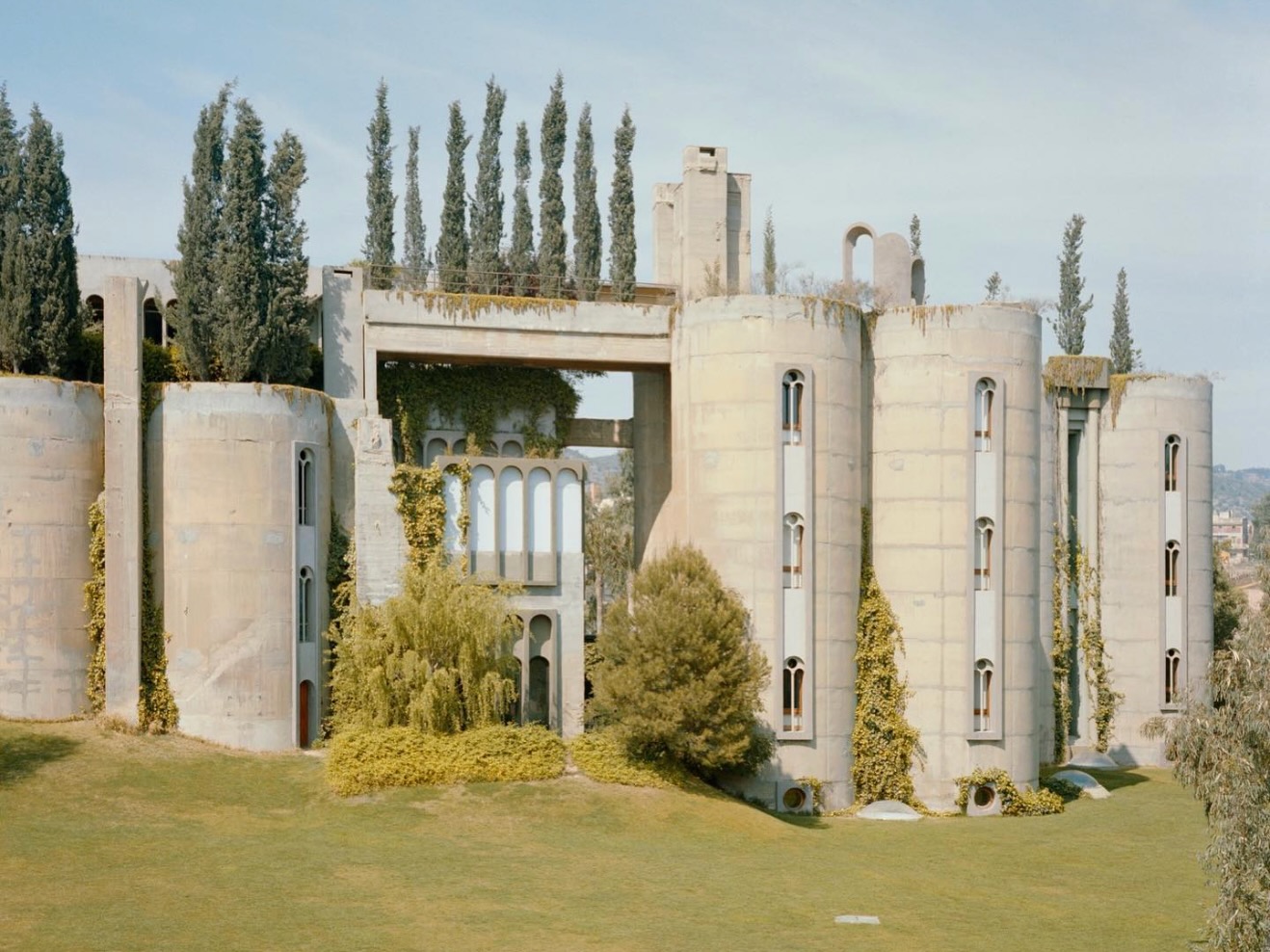
In the 1990s and beyond, his architecture became more refined, his vocabulary distilled into light, steel and glass, yet the Mediterranean remained his touchstone. The warmth of colour, the choreography of space and the dialogue between shadow and sun continued to define his buildings, whether in Europe, Asia or North Africa. This is most recognisable in La Fábrica, the Taller de Arquitectura headquarters. La Fábrica is a converted cement factory on the outskirts of Barcelona and according to the firm the space ‘demonstrates that architecture is temporal, that its uses can shift over time, and that its meanings are always contingent.’ Bofill himself suggested on several occasions that conventional thinking was impossible at La Fábrica.
Bofill’s radical reinterpretation of Mediterranean architecture inspired a generation of designers in Ibiza and beyond. The crisp geometries, spatial layering and sculptural forms that became his signature helped shape a wider language of contemporary Mediterranean architecture. He remained, throughout his career, an architect of contradiction and harmony, rational yet romantic, monumental yet human. His work bridged past and future, idealism and pragmatism, structure and poetry. When he died in 2022, he left behind a profound legacy that continues to encourage unconventional thinking and insists that architecture can be both visionary and grounded, social and sensorial. Universal, yet deeply of its place.
Photos courtesy of @bofillarquitectura