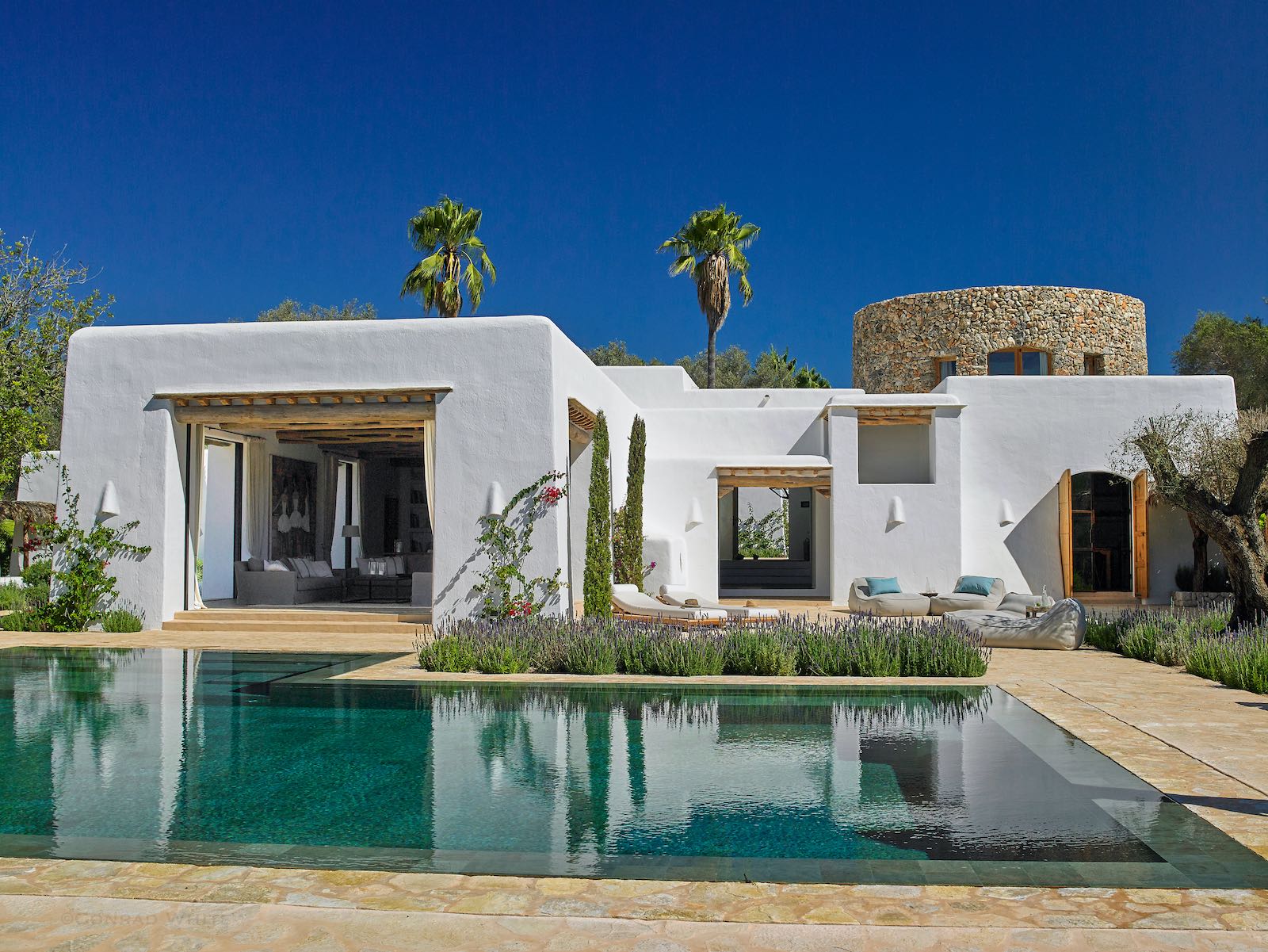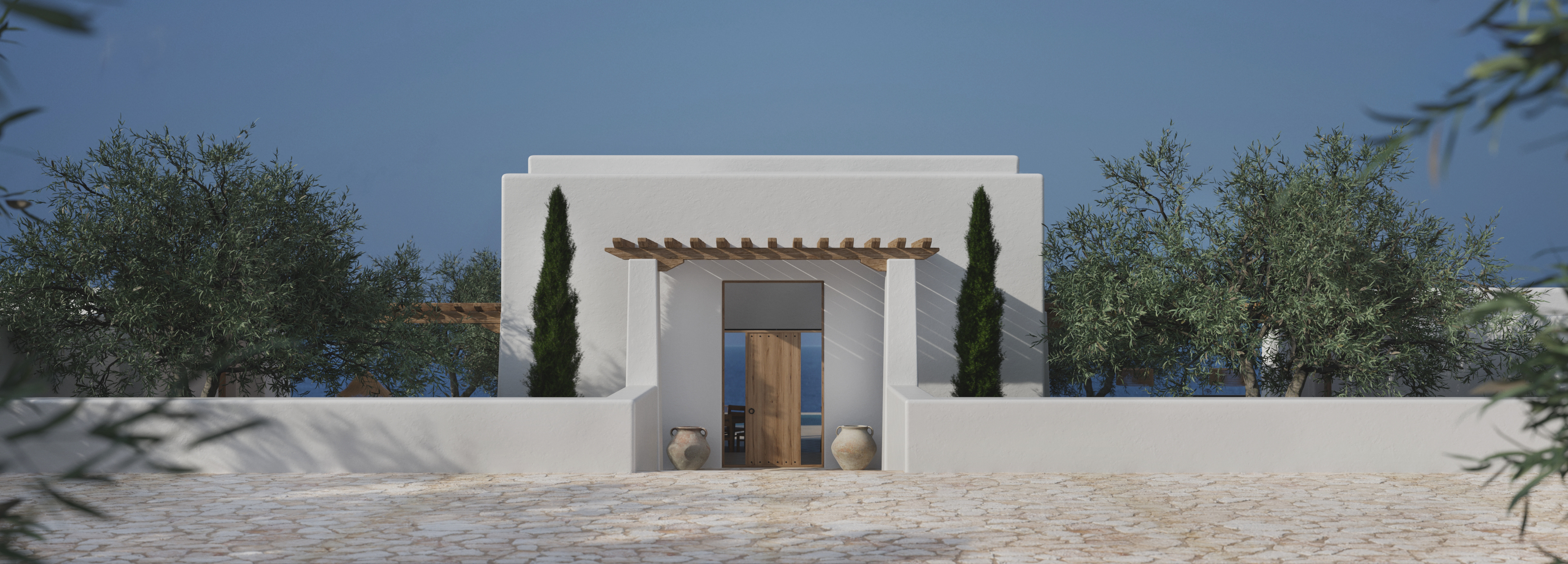
This five-bedroom family home sits high in the lush hills of Lefkada, one of the least developed islands in the Ionian Sea. Connected to the mainland by a causeway and floating bridge, the clear waters shift from turquoise to deep sapphire, shimmering against a rugged coastline where ancient olive groves climb every slope. The similarities to Ibiza are striking, making this Mediterranean idyll beautifully aligned with the Blakstad style.
Like Ibiza, Lefkada carries the weight of history, having seen its share of empires rise and fall. Legends cling to it and some scholars argue that it was Homer’s Ithaca, the birthplace to which Odysseus longed to return. Ibiza too, has entered the epic’s orbit, sworn by some to be the site where sirens attempted to lure Odysseus towards destruction under the shadow of Es Vedrá. Whether true or not, such tales remind us that both islands are bound by deep layers of story, each a place of captivating beauty and dogged resilience.

Despite the mythological connections, the most immediate similarity between the two islands lies in their tangled planning codes, intricate by-laws and recalcitrant councils. “It was a challenge,” recalls lead designer Rolf Blakstad. “We’re used to complex regulations in Ibiza. In Greece, they were slightly different, quite perplexing. It’s like local bread: the recipe changes a little from place to place, but at the end of the day, it’s still flour, water, yeast and salt. The trick is knowing how to use those rules to your best advantage.”
One of the more inventive solutions took shape in the villa’s soaring double-height columns rising from the pool patio to the primary suite above. “Those columns were one of the quirks the local codes allowed,” says Rolf. “An open porch doesn’t count as part of the footprint, so we could create a usable area that was considered open space in Greek planning terms, therefore shaping the façade we wanted.” Evoking Grecian architectural tradition, these towering columns may appear purely decorative but they help expand the space while adding a regal ambiance and avoiding the wrath of the local council.

The house was designed as a holiday retreat for a couple with grown children. It needed to feel expansive and social in summer, yet intimate when occupied by just the two of them. Its layout follows a clear central axis: from the entrance, the line of sight runs through the open-plan living area and out to the pool and sea beyond. Above sits the primary suite, complete with a wide, shady terrace and panoramic views. Two guest wings extend to either side, each with a pair of bedrooms, ensuring privacy while maintaining a convivial atmosphere.

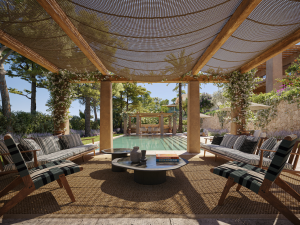
Inside, the Blakstad style is instantly recognisable. Natural stone floors, lime-washed walls and pale woods build warmth, while built-in sofas and a chic sunken lounge lead to sliding doors that dissolve the boundaries between inside and out. Pergolas filter sunlight into shifting patterns across the rooms, softening the geometry with nature’s paintbrush. The outdoor spaces are treated as living areas in their own right: a timber pergola shelters a generous dining terrace beside the outdoor kitchen and barbecue, and another lounge opens toward the pool. The centuries-old olive trees were carefully protected and preserved while climbing bougainvillea anchors the house deeply in the Mediterranean.
This retreat is both distinctly Greek and unmistakably Blakstad, bridging two islands that share history, myth and spirit, carrying a design language that proves itself adaptable to all cultures and settings. Grounded in tradition and shaped by landscape, the villa shows that even within compromise, architecture can still arrive at its purest form.